Urban Knowledge and Semantic Intelligence
1. The Grand Vision
While trajectory coordinates (longitude/latitude) describe how things move in a city, they lack the context of why they move. Real-world urban spaces are not just empty geometric networks; they are profoundly rich in semantics (e.g., points of interest, functional zones, road properties). However, existing spatial graph learning paradigms often struggle to ingest highly heterogeneous, unstructured, and cross-domain urban knowledge.
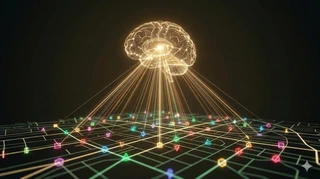
This research direction aims to build Foundation Models for Urban Spaces. By elegantly bridging the reasoning capabilities of Large Language Models (LLMs) with the structural modeling power of Graph Learning, we seek to create a unified, generalizable semantic representation of urban road networks. This will transform rigid transportation graphs into “knowledge-aware” spatial cognitive systems.
2. Key Research Questions
To realize this vision, my research investigates three critical scientific challenges at the intersection of AI and Urban Computing:
- RQ1: Cross-Domain Semantic Alignment: Urban data across different cities or platforms often follow completely different taxonomies (e.g., varying POI categorization standards). How can we leverage the zero-shot reasoning of LLMs to automatically align and unify these heterogeneous labels across disjoint spatial networks?
- RQ2: Generalizable Spatial Representation: How do we design a unified semantic graph learning framework that transcends specific local datasets, learning universal road network representations that are highly transferable to new, unseen cities?
- RQ3: Regulated Knowledge Integration: Injecting massive textual semantics into geometric graphs can cause “negative transfer” or semantic noise. How can we develop regulated, context-aware gating mechanisms to ensure that only task-relevant urban semantics are fused into road-centric graph representations?
3. Current Milestones & Publications
My recent work has laid the theoretical and methodological groundwork for this agenda:
- Tackling RQ1 (Semantic Alignment): We pioneered the use of prompt-driven Large Language Models to solve the notorious cross-taxonomy label alignment problem in transportation networks. This drastically enhances model transferability across diverse urban datasets. (Published in IEEE ITSC 2025)
- Tackling RQ2 (Generalizable Frameworks): We developed a comprehensive semantic graph learning architecture specifically designed for road network representation, establishing a new baseline for capturing complex urban structures. (Published in IEEE ITSC 2025)
- Tackling RQ3 (Regulated Access): We are currently exploring advanced regulated access mechanisms to intelligently filter and integrate urban semantics into road-centric graphs, ensuring high signal-to-noise ratios in downstream spatial tasks. (Under Review)
4. Future Impact
This agenda pushes the boundaries of Science in the urban domain. The resulting semantic intelligence will empower a wide array of high-level applications, including LLM-driven Urban Planning, Semantic HD Map Generation for Autonomous Driving, and Context-Aware Traffic Management, aligning perfectly with the strategic goals of next-generation smart city governance.
